
PROTOCOL OVERVIEW
Understanding how Octopus enables private transactions on Sui
ARCHITECTURE DIAGRAM
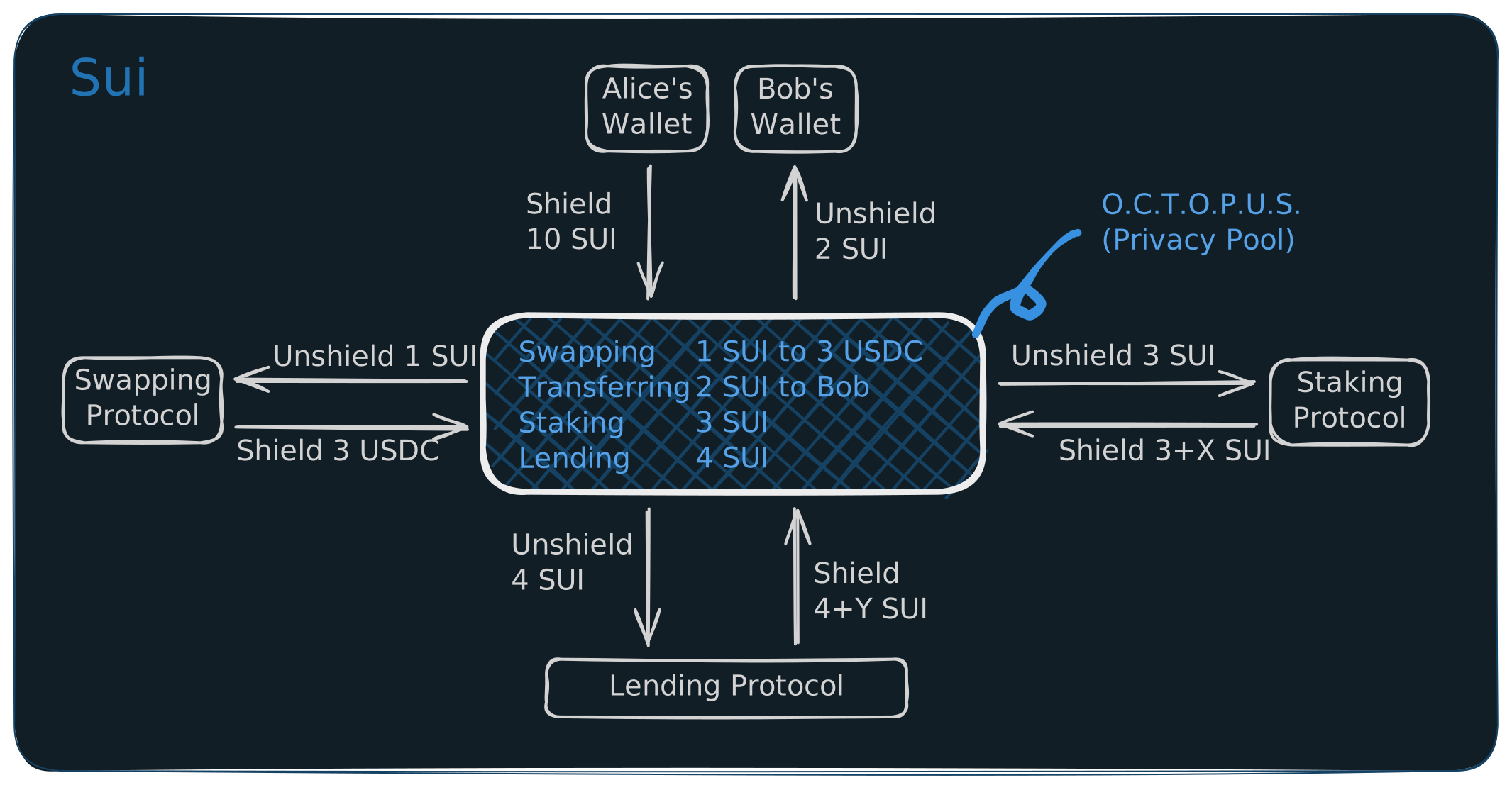
USER INTERACTIONS
SHIELD (Deposit)
Users deposit tokens into the privacy pool, converting them into encrypted notes. Each note is represented by a commitment stored in a Merkle tree, making it indistinguishable from other notes.
TRANSFER (Private Payment)
Send tokens privately to another user within the pool. Each transaction accepts up to 2 input notes and produces 1 transfer note to the recipient, plus 1 change note if any remainder exists — completely hiding sender, recipient, and amount from observers.
SWAP (Private Exchange)
Exchange tokens privately through integrated DEXs. The swap happens within the privacy pool, maintaining anonymity while leveraging external liquidity sources like DeepBook V3.
UNSHIELD (Withdraw)
Withdraw tokens from the privacy pool using ZK proofs. The proof verifies ownership without revealing which deposit it came from, breaking the link between deposits and withdrawals.
COMING SOON: RELAYER NETWORK
Today, users submit transactions directly from their wallets — which means your public address is visible on-chain, even if the contents of your notes are hidden. A relayer network eliminates this last remaining metadata leak.
WITHOUT RELAYER
- • Sender's public address is exposed on-chain
- • Gas payment source is traceable
- • Transaction timing reveals behavioral patterns
- • Shield / unshield operations can be correlated
WITH RELAYER
- • Transactions appear to originate from relayer addresses
- • User's public address never touches the privacy pool
- • Gas paid by relayer, reimbursed in shielded tokens
- • On-chain correlation between operations is broken
PRIVACY GUARANTEES
SENDER ANONYMITY
ZK proofs hide the sender's identity by not revealing which note is being spent
RECIPIENT PRIVACY
Output notes are encrypted, only decryptable by the intended recipient
AMOUNT CONFIDENTIALITY
Transaction amounts are hidden within encrypted notes, not visible on-chain